Read together
Who are the nine nights for?
Navratri means nine nights. The festival honours Devi, the divine feminine. Devotees turn towards the Goddess through worship, music and time with their community. The autumn celebration is widely observed, and there are other Navratri observances during the year. A local family or temple calendar can help you learn which one your community is celebrating.
The focus can differ between traditions. Some honour nine forms of Durga. Others devote three days each to Durga, Lakshmi and Saraswati. This is a useful first question for a child: who is being honoured here? You do not need to memorise every name before asking someone to introduce the celebration.
A circle of dancers, a display of dolls
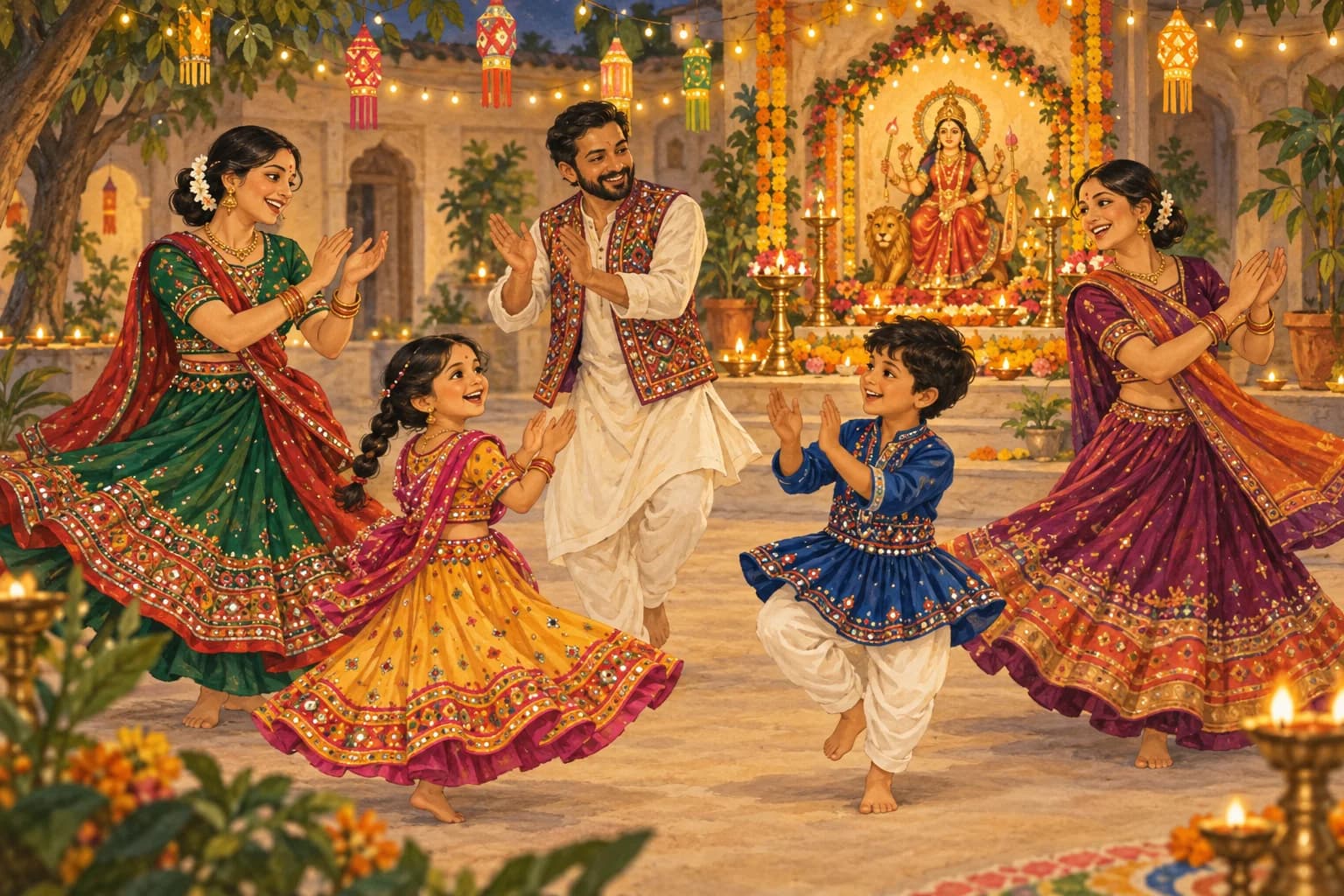
For many families with roots in Gujarat, garba is an important part of Navratri. People take part in a devotional folk dance, often moving in a circle around a central sacred display. The gathering can bring many generations together. Someone learning the steps may begin by watching carefully and asking a familiar person for help.
In many South Indian homes, you may see golu: an arrangement of dolls and figures that can include deities and scenes from stories or daily life. Families visit one another’s displays, and singing and offerings can be part of the welcome. Each arrangement can prompt a question: who is this figure, and why did the host choose it?
Garba and golu are two examples of a much wider festival. One family’s memories cannot stand for every region or home. The tenth-day celebration, called Vijayadashami or Dussehra in different settings, also carries different stories and observances. This guide introduces the nine nights; it does not ask every family to follow one order of worship.
Become a thoughtful guest
If you are invited to a celebration, ask the host how to join. Before touching a display, find out whether it is meant to be handled. Listening, learning a song or helping welcome another guest can each be a way to take part. If the place is unfamiliar, stay with your grown-up and let them help you ask questions.
Later, choose one thing you noticed and one thing you still wonder about. Perhaps a song had an unfamiliar word, or a small figure reminded someone of a childhood memory. A festival notebook can hold both the answer and the next question. Learning about a tradition can continue after the decorations have been put away.