Read together
Who is Lakshmi Maa?
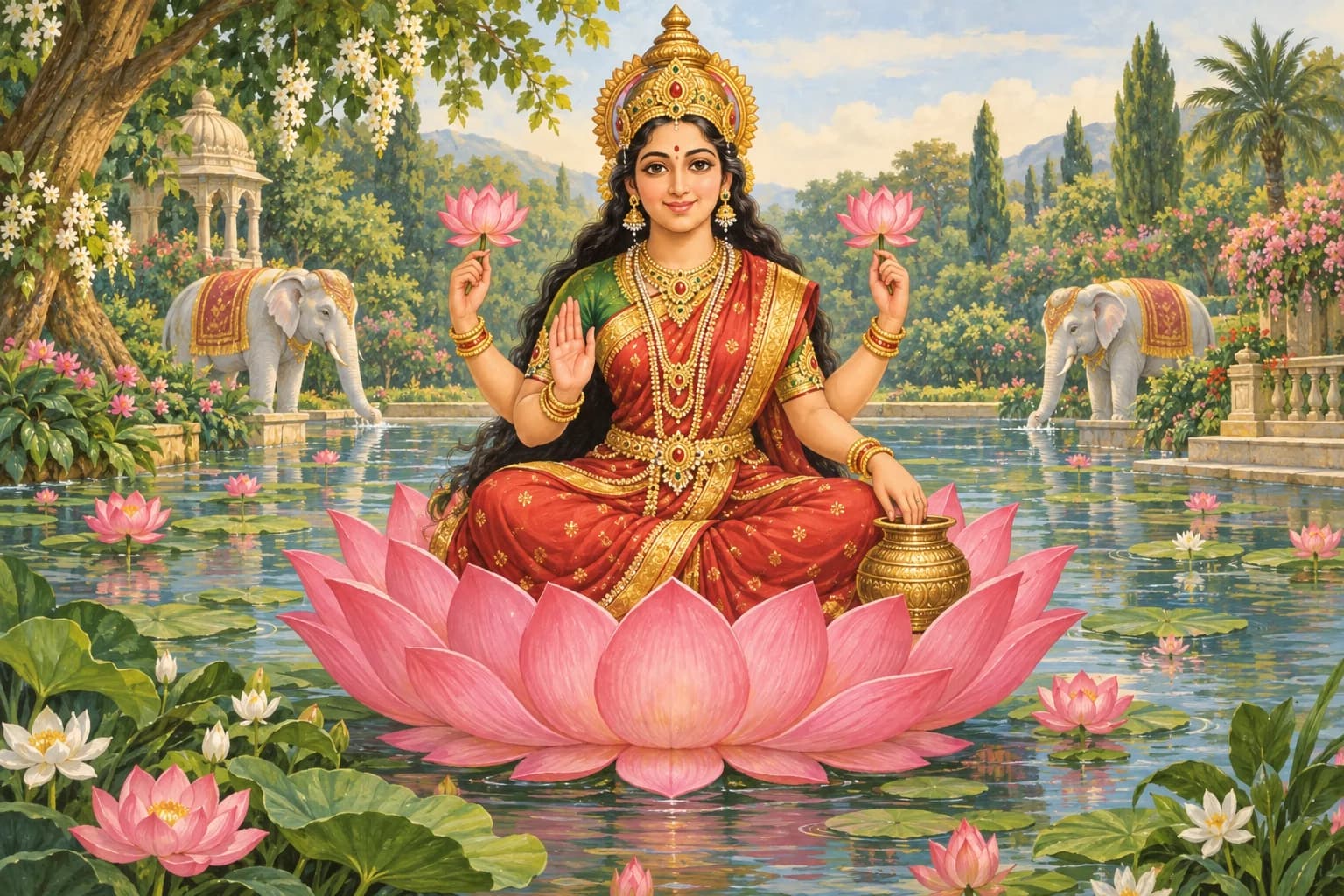
When you hear the word wealth, you might picture coins. Lakshmi Maa is worshipped as the Goddess of prosperity and good fortune. In Hindu devotion, prosperity can be understood in material and spiritual ways. This guide begins with her sacred image, then asks an everyday family question: what helps a home flourish?
Keep the sacred meaning and the family activity connected but distinct. Lakshmi Maa is a deity whom people honour in worship, not simply another name for household objects. Our care map is an original way to notice support in daily life after learning about her. It cannot measure anyone’s blessings, wealth or spiritual life.
A sacred image and its connections
Lakshmi is closely associated with Vishnu. In the Ramayana tradition described by the University of Michigan Library, Sita is understood as Lakshmi’s avatar, just as Shri Ram is Vishnu’s. That gives us a connection between an image we see in worship and people we meet in a sacred story. Different texts and communities explore the Goddess in different ways.
Look for a lotus in her image. It may be a flower she holds or the seat beneath her. You may also see a pair of elephants. The lotus is a familiar sign of beauty; HAF also explains it as an image of spiritual growth amid difficult surroundings. These are symbolic readings of an artwork, not a way to predict what will happen to a person.
Look carefully, learn a tradition
Before interpreting a picture, describe one thing you can actually see: a lotus, a hand or an elephant. Then compare your observation with the source or explanation beside the image. If an object is absent in another picture, that alone does not make the picture wrong. Artists and devotional traditions can emphasise different details.
At Diwali, many families welcome Lakshmi through worship, lights and preparations at home. Some Navratri observances also honour her. A visit can include time with relatives and friends. Ask a family member which part they remember most: a prayer, a carefully prepared space, a shared meal or someone arriving at the door.
What makes a welcome possible?
Welcoming someone need not mean buying something. With a grown-up, you could clear a comfortable place to sit or ask whether the visitor would like water. Listen before making an offer and respect a refusal. These are our everyday examples of care, not rules about how a family must perform Lakshmi puja.
Now look at one ordinary meal. Ingredients, utensils and a place to sit matter. So do the person who cooked, the time someone spent washing up and the knowledge of how the food was made. Our family exercise calls attention to these different kinds of support. Some involve money, while others involve work, skill and relationships.
Map what we can care for
Caring for what we have might mean returning a shared book, checking before using the last sheet of paper or asking whether someone needs help with a task. Sharing begins with listening: what would actually be useful? Give only what you have permission to give. A thoughtful offer of time can matter as much as an object.
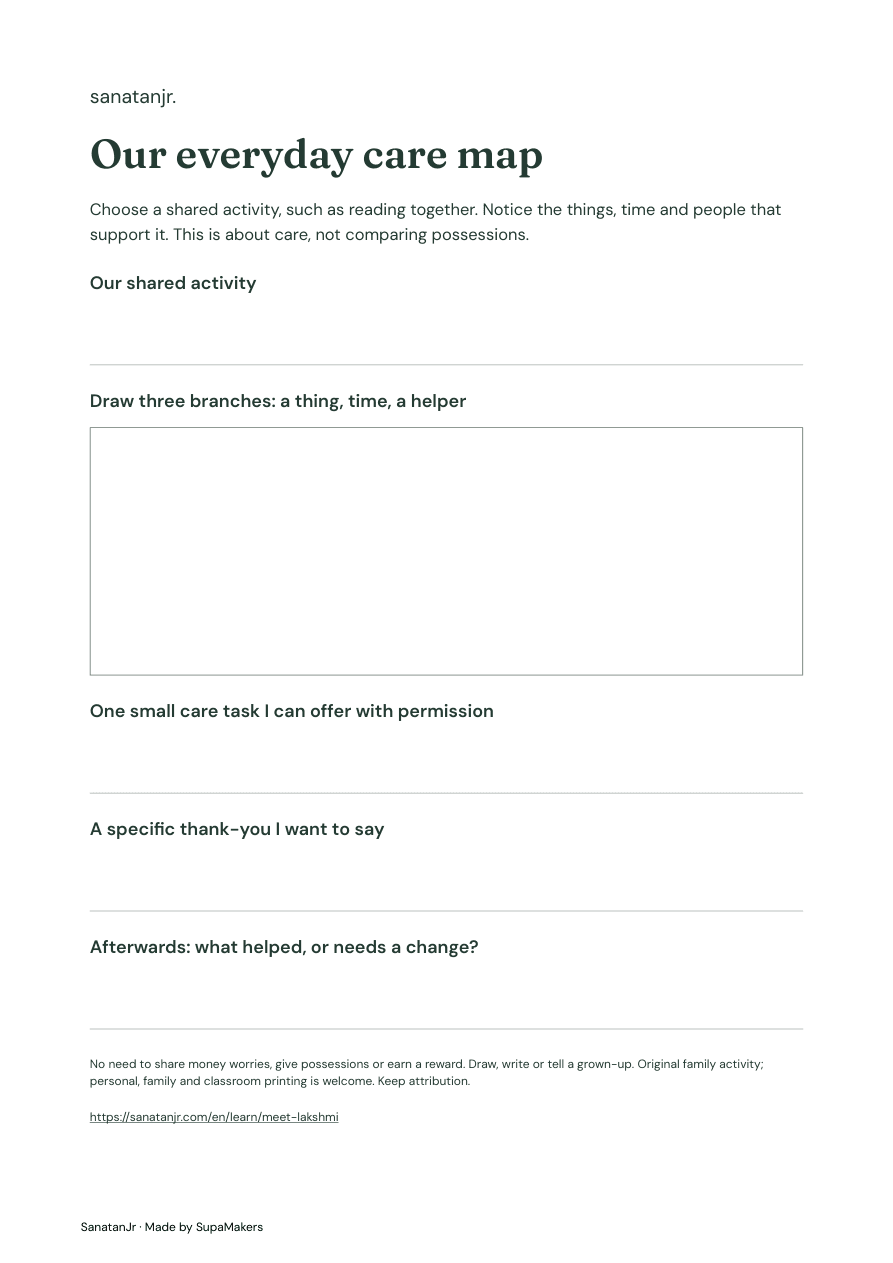
Make the map specific enough to use. If the centre is a reading corner, a book is one branch, the person who reads aloud is another and the time you share is a third. Ask what would help keep that corner welcoming. Returning a book with care may be a more useful contribution than offering an object nobody needs.
Gratitude without a bargain
Families have different resources, and fewer possessions do not make anyone less deserving of respect. Worship and generous actions are not a bargain that guarantees riches. On your care map, include something you receive and one small way you can help care for it. End by thanking a person for a specific contribution you noticed.
You can say a specific thank-you without keeping a debt. “Thank you for reading slowly so I could follow” notices a real contribution. The person does not owe you a gift in return. Later, revisit the map and ask what needs care now; the useful next step may change from one day to another.