Read together
Who is Shiv Ji?
Shiv Ji is worshipped in many Hindu traditions. You may see a seated figure, a Shiva linga or Shiva dancing as Nataraja. Different forms bring different aspects of the divine into focus. This introduction uses a few artworks to help a family begin looking, naming and asking, rather than trying to learn every story at once.
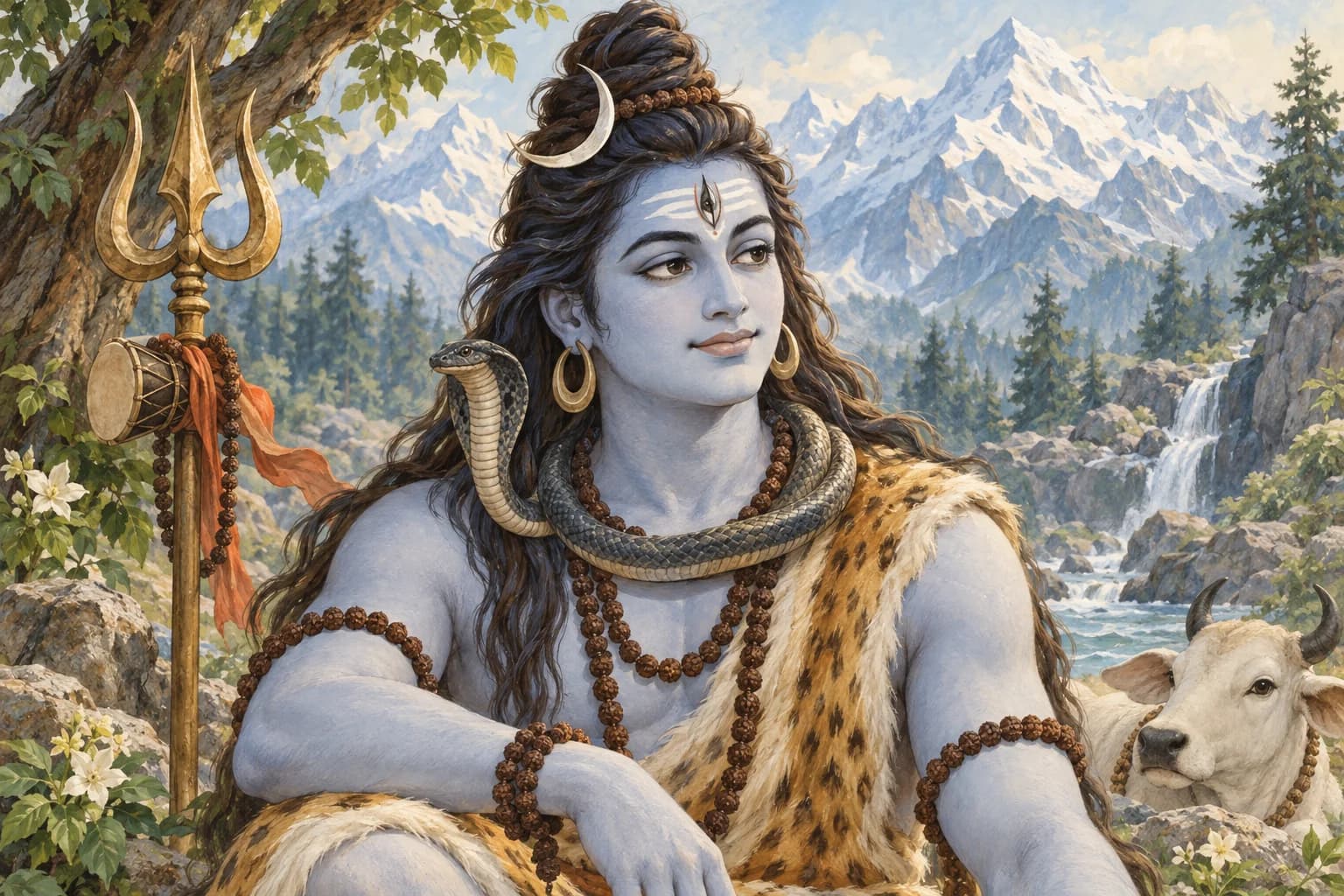
Start with one image and give it time. Ask whether Shiv Ji is seated, standing or dancing. Then notice one object or gesture. Learning a sacred image is more than collecting a list of symbols: it is an invitation to understand why people honour this form and what the artist has chosen to show.
Why does Shiv Ji dance?
Shiva is associated with transformation. In the Nataraja image, creation and destruction appear within a single sacred dance. These are ideas about the universe and divine power. To understand an image, it helps to know which form it shows and what its objects mean within that tradition.
There is reassurance in the dance as well as power. In the Met’s Nataraja, the lower right hand is raised in abhayamudra, a gesture that dispels fear. One image can hold several meanings together. We can notice the drum, the flame and the reassuring hand without reducing Shiv Ji to only one object or one idea.
Which details can we recognise?
A seventh-century stone sculpture from Kashmir in the Metropolitan Museum of Art shows Shiva’s face emerging from a linga. The museum points out a third eye, a sign of wisdom, and a crescent moon in his arranged hair. The face and the linga appear together here; they need not be competing ways to represent Shiva.
In the Met’s Nataraja sculpture, one hand holds a small drum associated with creation and another carries the flame of destruction. The dance brings movement into the image. Compare that with the quiet seated figure on our page: both invite attention, but they do not show the same pose or all the same objects.
How do the stories connect?
In the Bhagavata Purana account of Ganga’s descent, the river asks who can receive her powerful fall. Bhagiratha seeks Shiv Ji’s help, and Shiv Ji receives the waters on his head. The river has concerns, the king makes a request and another helper responds. Our linked story lets you follow those different roles before talking about caring for water today.
Maha Shivaratri is an occasion of devotion to Shiv Ji. Families and communities may pray, visit a temple or listen to sacred stories; observances vary. Our festival guide offers a short family reading and a question to explore. Children do not need to copy adult fasting or an all-night observance to take part in a thoughtful conversation.
What did I see, and what do I wonder?
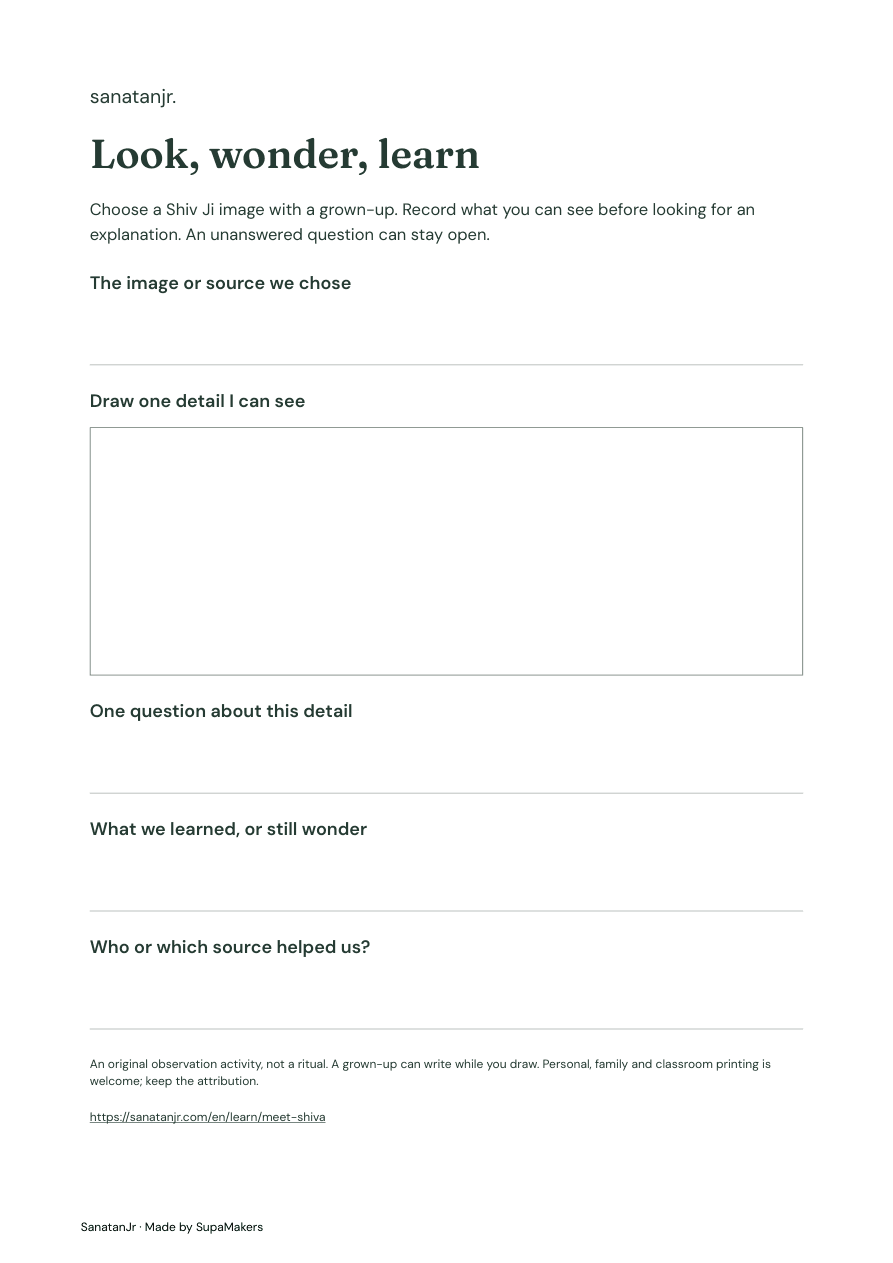
Try separating an observation from a question. ‘I can see a crescent’ is an observation. ‘Why is it in Shiva’s hair?’ is a question. You do not need to guess an answer immediately. A source, teacher or family member familiar with the tradition can help you explore it.
Now make a small image notebook. Draw one detail that interests you and leave space for what you learn. If a second picture shows something different, add its title or where you found it. Differences in region, date, artistic choice and sacred form are reasons to investigate, rather than a reason to declare a picture wrong.
Keep a question for next time
Suppose you draw a crescent and write, “I wonder why it is here.” A grown-up can help you record which picture you used and where an explanation came from. If you cannot find an answer, leave the space open. A good notebook can contain an unfinished question; it does not have to turn every guess into a fact.
A story can bring one of these forms into another kind of focus. In our reading about Ganga’s descent, Shiv Ji helps receive the river’s force. Maha Shivaratri introduces an occasion devoted to him. Choose one connection for your next conversation, and keep your unfinished question in the notebook.