Read together
Who is Shri Ram?
Shri Ram, also called Rama or Ramachandra, is a Hindu deity and the central figure of the Ramayana. Many Hindus worship him as an avatar of Vishnu. His story is closely connected with Ayodhya. Devotees remember him through worship, recitation, songs and stories, with different practices in different homes and communities.
The Ramayana is an epic: a long narrative containing journeys, relationships and difficult choices. The Sanskrit telling associated with Valmiki is one important source; other languages and traditions have their own cherished tellings. A short introduction cannot contain them all. When you meet a new episode, ask which telling it comes from and what the storyteller has chosen to include.
Recognising a sacred image
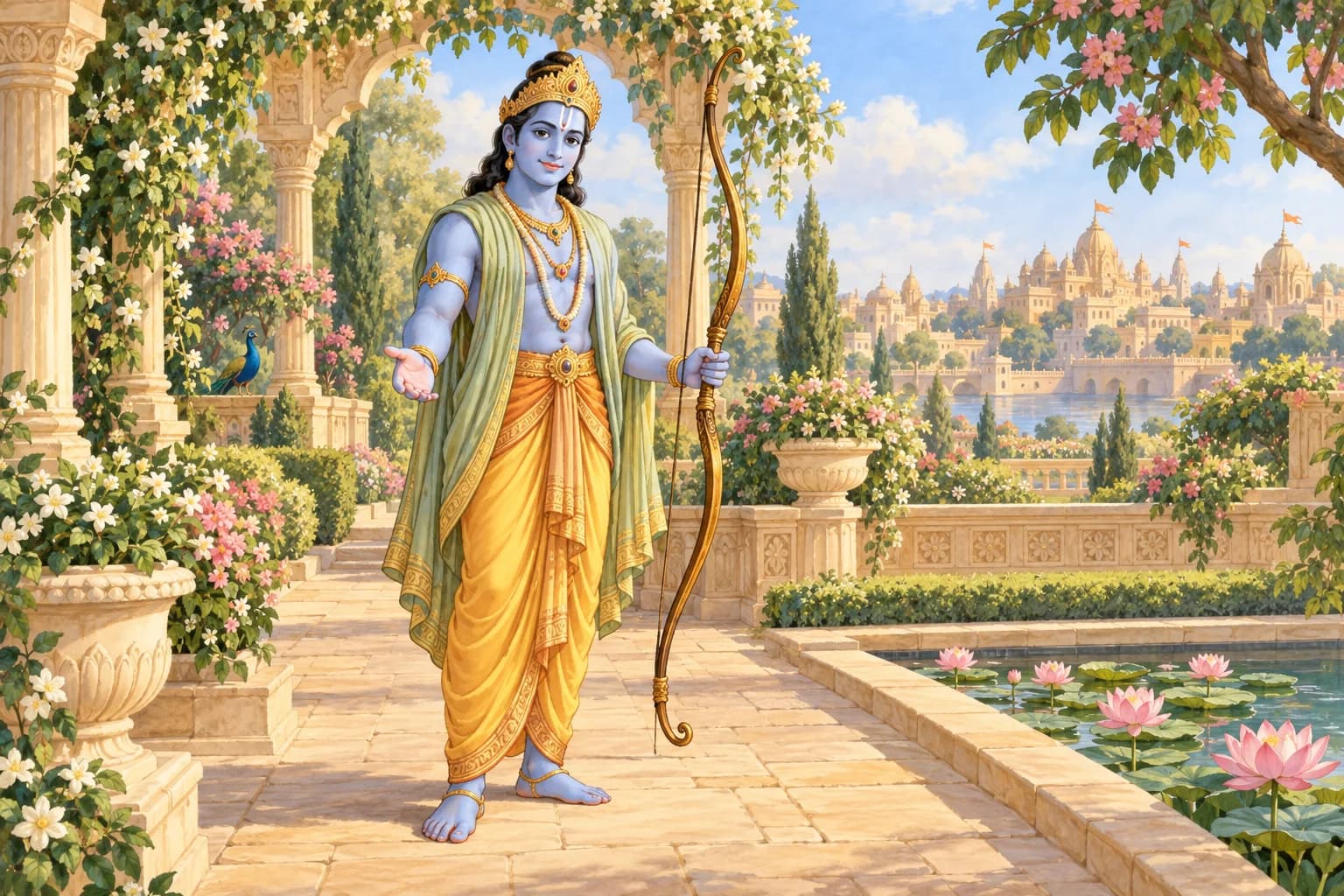
In many artworks, a bow helps us recognise Shri Ram. Our illustration shows him holding it at rest in a garden. Other images picture him travelling in the forest or seated with his companions. Clothing, colour and pose vary. Sacred art communicates through these choices; our new illustration is imagined devotional art, not a photograph of a historical event.
The Asian Art Museum's sculpture brings Rama together with Lakshmana and Sita. The Met's small shrine panel includes Hanuman and other figures too. Look at the group before trying to name everyone: who is standing nearby, who is seated, and what objects can you see? Reading the museum's description with a grown-up helps separate what you observe from what you guess.
Meet the people around him
Sita is Rama's wife and a central figure in the Ramayana, with her own experiences, words and decisions. Lakshmana is Rama's younger brother and accompanies him during the forest journey. Bharata, another brother, appears in our story about caring for a kingdom in Rama's absence. These relationships help you follow individual episodes without memorising a whole family tree.
Hanuman Ji is Rama's devoted ally. In their first meeting, careful speech and listening help people learn who the others are. Later stories describe extraordinary acts of service. An introduction can start with the conversation rather than the battles. Ask what a respectful greeting makes possible when two people have not met before.
Responsibility and difficult choices
Many devotees connect Shri Ram with dharma: questions of right conduct, duty and responsibility. Dharma is a rich idea that cannot be reduced to one instruction. The Ramayana includes choices that grown-ups discuss in different ways. You are allowed to ask questions about a character's decision and to listen when someone explains the tradition they know.
For everyday life, begin with a small responsibility: returning a borrowed book or helping put away shared materials. Think about who is affected and whether you can do what you offer. A story about keeping a promise is never a reason for a child to keep an unsafe secret or obey a harmful request. Tell a trusted adult if a promise worries you.
Choose a gentle first story
Our squirrel story asks whether a small contribution can matter. It comes from a familiar later telling and is not presented as an episode from Valmiki's text. Shabari's welcome offers another way into the Ramayana through hospitality. Each reading explains its source and adaptation, so a family can enjoy the story while understanding which account is being shared.
Ram Navami celebrates Rama's birth. His return to Ayodhya is also remembered in a widely told Diwali tradition, although Diwali has other meanings across communities. Choose the relevant festival guide when that is your question. Today you could simply read one welcoming encounter and talk about one action, leaving the longer epic for another time.
A promise you can think through
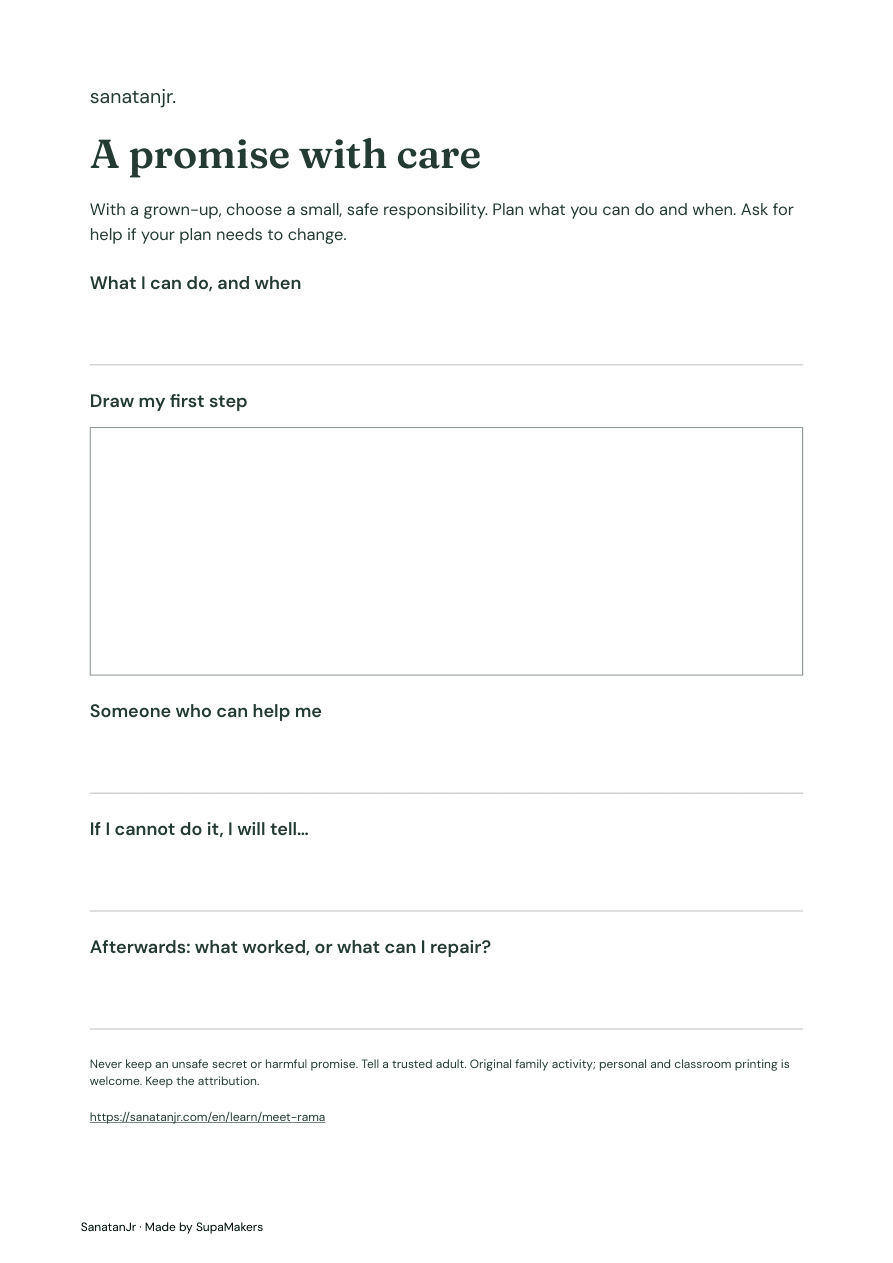
On the thoughtful-promises sheet, choose a small, safe responsibility with a grown-up. Say what you can do and when. Draw the first step, then name any help you might need. Make the promise specific enough to understand: ‘I will put these books back after we read’ is easier to discuss than ‘I will always be good.’
After trying, talk about what happened. If you forgot or needed help, say so and work out a repair. Responsible behaviour includes being honest about limits and changing an unsafe or impossible plan. End by choosing a companion story and asking how the people in it care for one another. There is no score for finishing quickly.