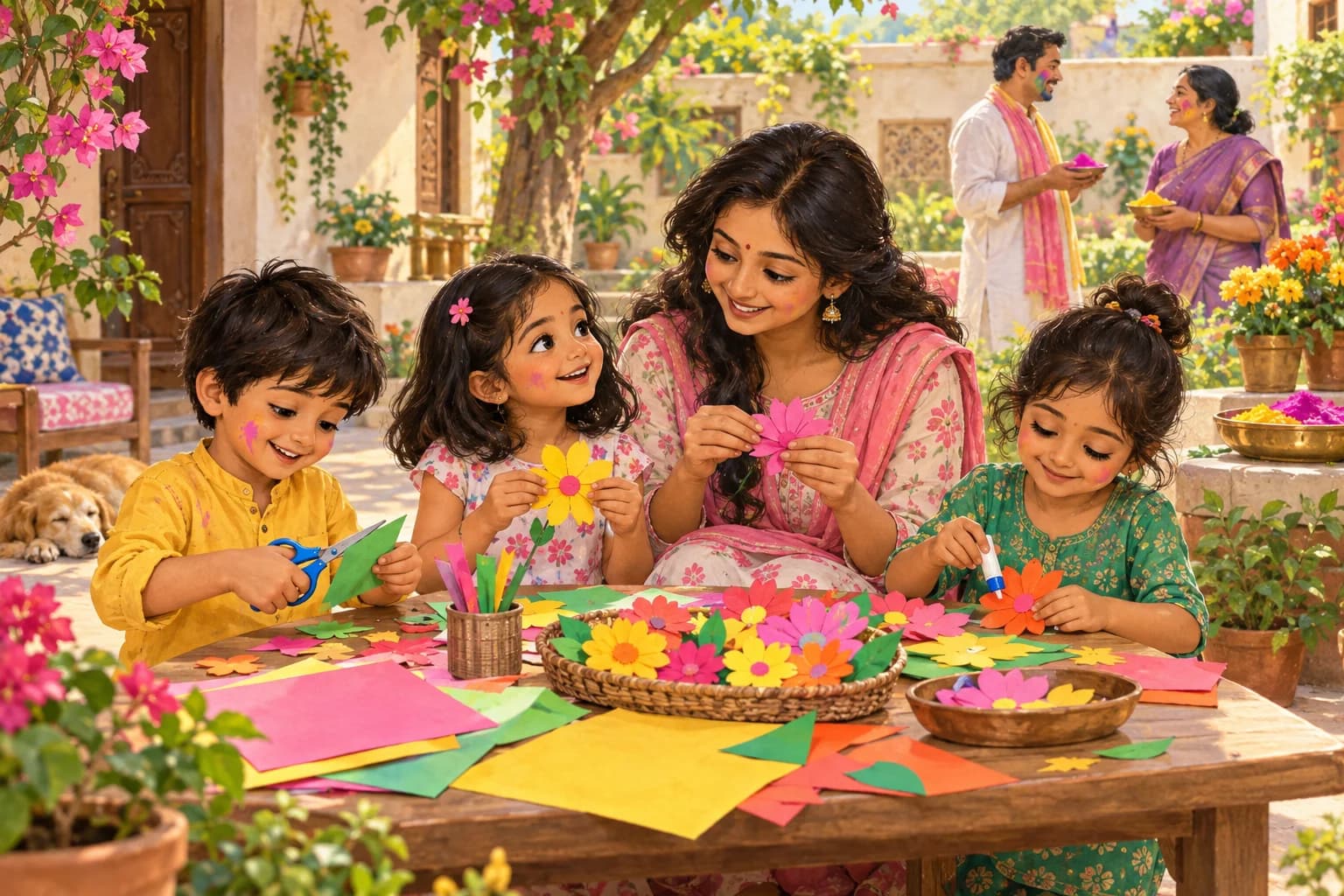
What Is Holi? A 2-Minute Guide to the Hindu Festival of Colors
Video by: Hindu American Foundation
Video language: EnglishLength: 2:02
Before you watch
An English animated introduction to Holi’s colours, devotion and different traditions. It briefly describes danger to Prahlad and shows him with Holika in a stylised fire scene. Its two-day outline is a simplification; celebrations vary. Ask permission before applying colour. Automatic captions misspell several names. This explains the festival rather than telling the full Prahlad story.
Selection checked: 2026-09-15. Complete available English captions, comparison with the guide’s HAF Holi source and sampled animated scenes; not a full audiovisual or age-certification review.
Hearing another language?
YouTube may choose a dubbed track. Open Settings in the video player, then Audio track, and choose the language selected above. We review each listed language separately.
Read together
More than a splash of colour
Holi is a Hindu spring festival around the full moon of Phalguna. Its colours are easy to notice. Before reading, name one thing you already know about the celebration and one question you have. Keep your question beside you; the religious context and family conversation may give you a new way to think about it.
One familiar tradition remembers Prahlad, a devotee of Vishnu, and Holika’s failed attempt to harm him with fire. Holika Dahan recalls this story through a ceremonial bonfire. The account includes danger to a child and Holika’s death. Our guide introduces its connection with Holi; the bonfire and story are never a game for children to copy.
Different celebrations, shared welcome
Other Holi traditions celebrate Radha and Shri Krishna, especially in Braj. Songs, local stories and ways of playing with colours can differ. Hindu American Foundation’s introduction describes this variety. A festival photograph shows one place and moment, so ask where it was taken before expecting every family to celebrate in exactly that way.
Now imagine a family gathering. One cousin enjoys colours, another wants to sing, and a grandparent would like a quiet seat. A thoughtful host can make room for all three. Offering a colour-free greeting, a song or shared food gives people different ways to take part. This is our planning example, not a required festival ritual.
Plan a Holi everyone can join
Before applying colour to anyone, ask and wait for their answer. A cheerful ‘no, thank you’ can be welcomed with the same warmth as a ‘yes’. Grown-ups can choose suitable materials, explain the event’s rules and arrange a clear place to rest. Young children need help with crowded spaces and any celebration involving fire.
Try making a paper celebration plan before the day arrives. Give your gathering a place to greet people, an optional colour activity and a quiet alternative. Think about the person arriving for the first time: how will they know what is happening and who can help? A clear invitation can make the celebration easier to join.
End by choosing one meaning to remember alongside the colours: friendship, devotion or a fresh start. Ask a family member which song or memory they would like to share. Your plan can change when someone tells you what they need. Listening is one way to turn a colourful occasion into a welcoming one.
Let’s talk about it
What can a family learn about Holi beyond the colours?
One more question
How could someone enjoy your gathering without having colour applied to them?
How could someone enjoy your gathering without having colour applied to them?
A little wisdom to keep: A welcoming Holi gives people a choice in how they join.
Design a welcoming Holi · 5 minutes
Draw a simple map of a pretend family gathering. Use symbols or words to show three ways to take part.
Mark a greeting spot, an optional colour activity and a quiet place for a song or drawing.
Pretend a guest says ‘I would rather stay colour-free.’ Practise a friendly response and show their options.
Ask a partner what would make the gathering easier for them. Change one detail of your map.
A note for grown-ups
Choose paper and drawing materials for the activity. Adults manage bonfires and actual colour play. The Prahlad–Holika account includes danger and death; share only the detail your child is ready to discuss.
Sources & tradition
Festival context follows HAF’s Holi introduction; regional practices and story preferences vary. The inclusive gathering and paper plan are original SanatanJr suggestions, not a ritual schedule. Consult a local calendar for a particular year and place.
Continue with Ahimsa to practise respectful words when people want different things. Navratri offers another introduction to the variety within Hindu festivals.