Read together
Welcoming Ganesha
Ganesh Chaturthi celebrates Ganesha’s birth. He is honoured as the remover of obstacles, and many Hindus remember him before starting an important task. As the son of Shiva and Parvati, he is part of a family you may already know from the stories of Ganesha and Kartikeya.
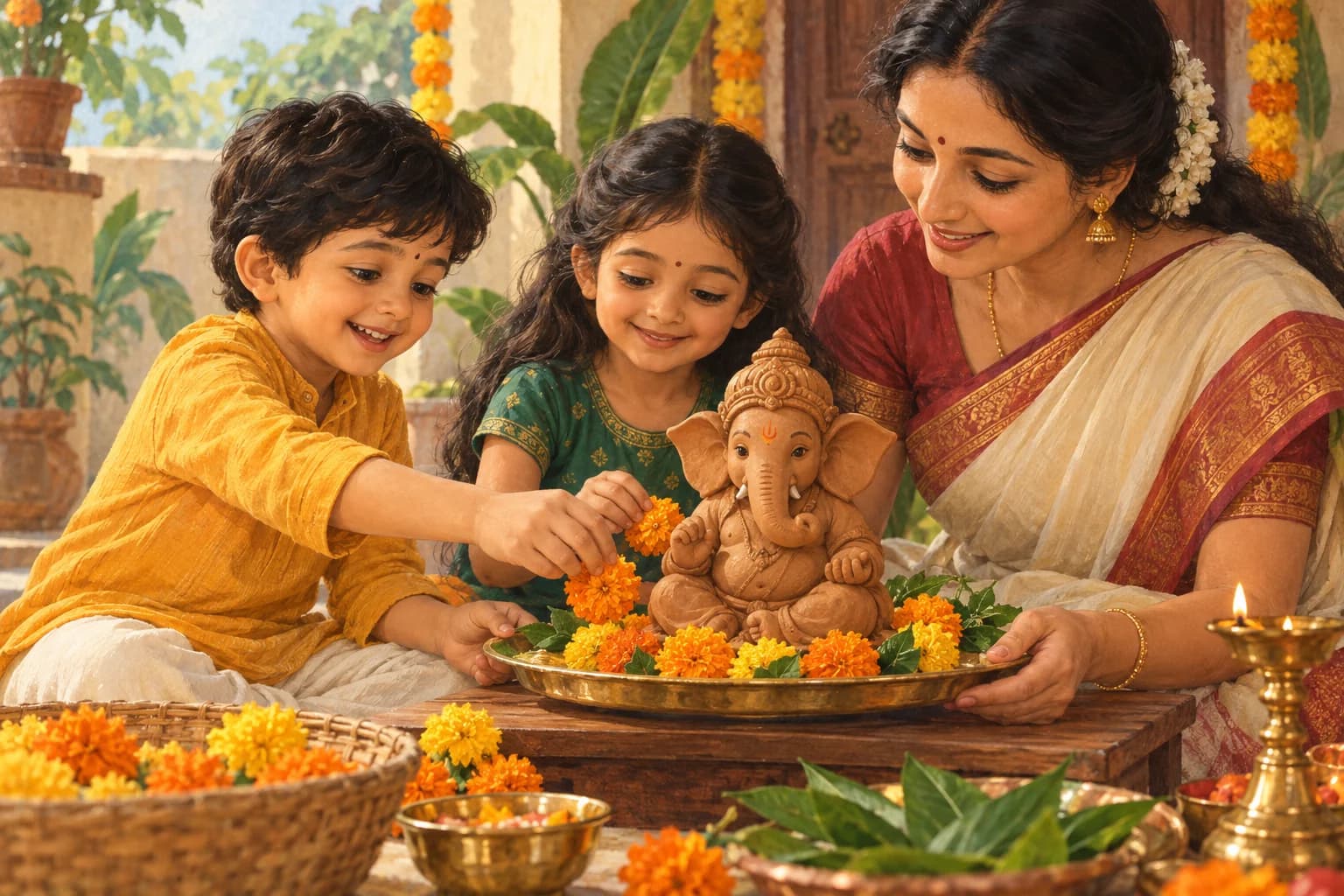
During the festival, homes and community gathering places may welcome a murti, a sacred image of Ganesha used in worship. People offer prayers and sing together. Modak is one familiar sweet offering, alongside foods that vary between communities. A visitor can ask the host what a particular song or offering means to their family.
A visit and a farewell
Many celebrations include visarjan, when the festival murti is immersed in water as part of a farewell. Some observances extend over several days, and households follow different schedules. Seeing a short celebration and a longer one does not mean that one family has forgotten the festival. The local tradition helps explain the timing.
The welcome also gives families something practical to think about: how do we care for the place we share? Public celebrations involve materials, visitors and clearing up. Ask a grown-up what happens to decorations afterwards. Learning about visarjan is different from making your own plan to put craft materials into a pond or river.
Choose a beginning of your own
Ganesha’s connection with beginnings can lead to a small family conversation. Think of something you are about to try: a puzzle, a new book or learning a song. What feels difficult about it? Naming the difficulty gives you a place to start. You might need a clearer instruction, a little practice or someone willing to help.
Remembering Ganesha can be meaningful to a devotee alongside those ordinary preparations. A mistake does not mean that you have failed to show enough devotion. When a first attempt does not work, pause and try a different approach. You can appreciate a sacred tradition while also making room for questions and patient learning.
You could also begin by making someone else comfortable. Set out a place for a family member to read with you, or help return shared materials after an activity. Then read about Ganesha and Kubera’s feast. Notice how the story asks us to look at the care behind a welcome, as well as the things that are offered.