Read together
What is a mandir?
A mandir is a Hindu temple: a sacred place where people come for worship, prayer and darshan. Many mandirs also bring a community together to learn and serve. A visit can be a chance to notice how a tradition is lived, beyond a picture or a story. You do not need to recognise every sacred image or know every prayer before you begin.
Mandirs do not all look or work alike. A small neighbourhood shrine, a large temple complex and a mandir in a shared building may have different spaces and customs. This guide offers a starting point for a child visiting with a grown-up. Your particular temple's own instructions matter more than a general checklist.
Before you go
Choose the mandir together and look at its official visitor information. Your grown-up can check opening and darshan times, entry arrangements, clothing guidance, shoe storage and whether photographs are allowed. Ask about step-free access, seating or quieter visiting times if those would help your family. Do not assume that another temple's rules or facilities apply here.
Talk about what the visit might feel like. There may be chanting, bells, people waiting, flowers or incense. You might find it peaceful, busy or unfamiliar. Agree on a simple way to say, ‘I need a break.’ Your grown-up can help find a suitable place to pause. There is no prize for staying longer than feels manageable.
Take one question, not a list of things you must perform. Perhaps you want to know who is honoured in this mandir, why people offer flowers, or what a particular word means. If you want to bring an offering, ask the temple first what it accepts. Paper and a pencil can stay with your grown-up for drawing afterwards; check the temple's rules about bags and other belongings.
Inside: notice, listen and ask
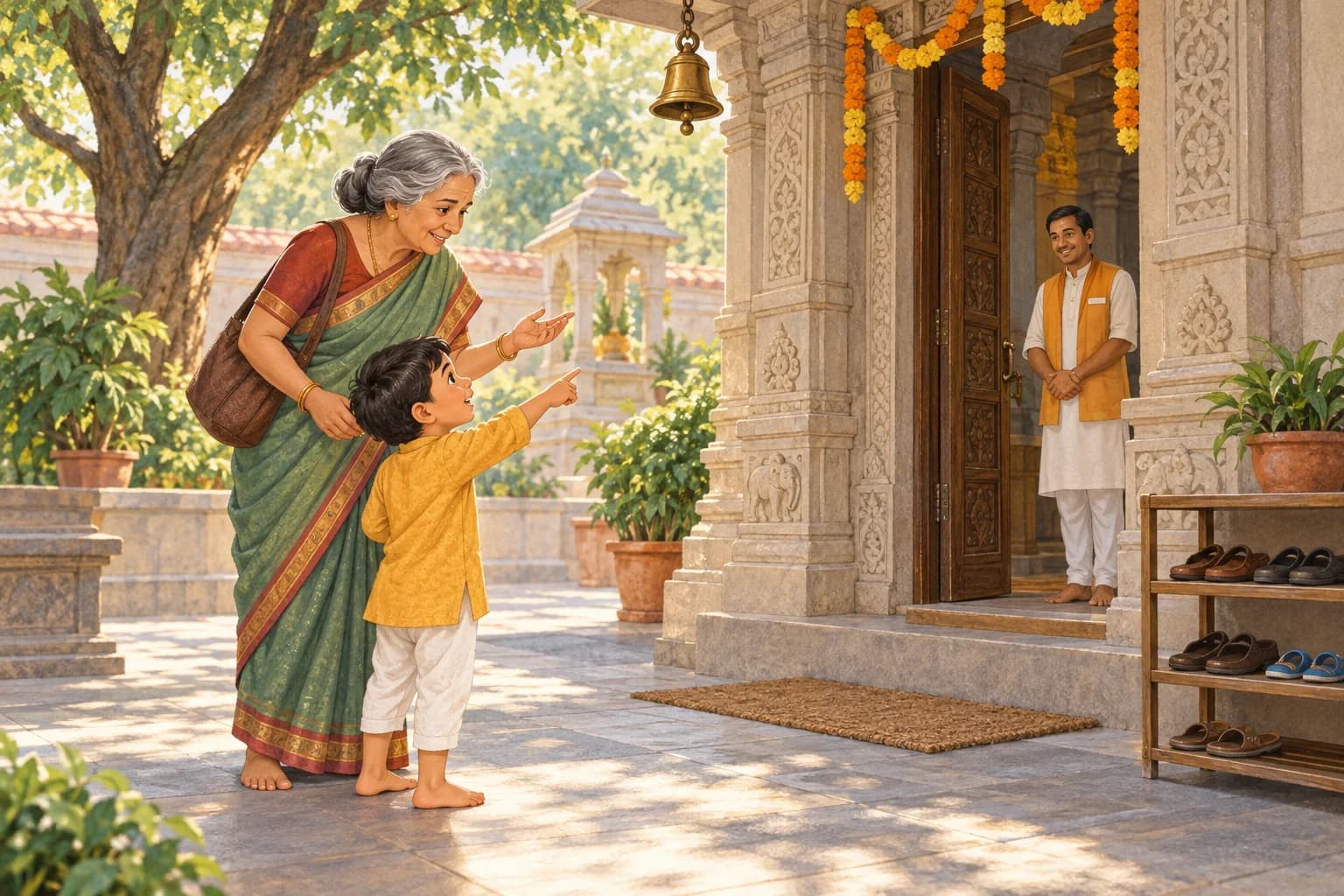
At the entrance, slow down and follow the signs or a volunteer's guidance. Many mandirs ask visitors to leave footwear in a designated area before entering the worship space. Remember where yours is. Stay with your grown-up, leave room for others and use the voice appropriate to the space. You can watch respectfully while you work out what is happening.
Look towards the shrine from the area where visitors are welcome. You may see a murti with flowers or clothes arranged around it. Notice a symbol you recognise from a story, but ask before deciding what it means. A sacred image is part of living worship for devotees, so do not treat it as a toy or touch it, its offerings or surrounding objects without permission.
If aarti is taking place, you may see an adult moving a lighted lamp before the sacred images while a prayer is sung. Bells or other instruments may accompany it. Watch from a comfortable place with your grown-up and leave the lamp and flames to the people conducting the worship. Your family can ask how visitors join in at this particular mandir.
You may be offered prasad. Before you accept food, let your grown-up check what it contains and whether it is suitable for you. Prasad is treated with reverence; you can explain politely if you cannot eat it and ask what to do. Participation need not become a race to copy everyone around you. A quiet question at a suitable moment can be more helpful than guessing.
Six words you might hear
Mandir: a Hindu temple, a place set apart for worship. Temples differ in the deities honoured, architecture and traditions they follow.
Murti: a sacred image or form used in worship. For devotees, a consecrated murti is a way to encounter the Divine, rather than simply a decoration. Different Hindu traditions explain sacred images in different ways.
Darshan: seeing the Divine with reverence. In many temple traditions, devotees also understand darshan as being seen by the deity. It is more than taking a quick look at an object.
Puja: worship offered with devotion. It may include prayers, flowers, light, water or food offerings; the form and sequence depend on the tradition and occasion.
Aarti: a form of worship in which light is offered before the deity, often with a sung prayer. You may also see the spellings arti or arati. Aarti is one part of some worship services, not a name for every temple activity.
Prasad: an offering received as a blessing after being offered to the deity, often food. The food and the way it is distributed vary. Ask the people serving it rather than assuming what it contains.
Questions before a first visit
Do I have to know a prayer? You can prepare for a first visit without memorising one. Ask your grown-up or the temple guide what is happening and how visitors can take part. If you want to learn a prayer later, choose someone who can explain both its words and the tradition in which it is used.
Can we take photographs or go into every room? Do not assume so. Some temples permit photographs in the grounds but not in the worship hall, and some spaces are reserved for those conducting worship. Check the temple's own instructions. You can remember a detail and draw it later without photographing people or sacred spaces.
Will every family do the same things? No. Even people visiting the same temple may have different family practices, needs and ways of praying. Ask about differences with kindness. A first visit can begin a conversation; it does not have to settle every question about Hindu traditions.
Afterwards: bring home a question
When you are somewhere comfortable afterwards, share one thing you noticed, one thing you wondered and one way someone showed care. Your grown-up might remember something entirely different. Both observations belong in the conversation. You can also say that something felt loud, confusing or surprising.
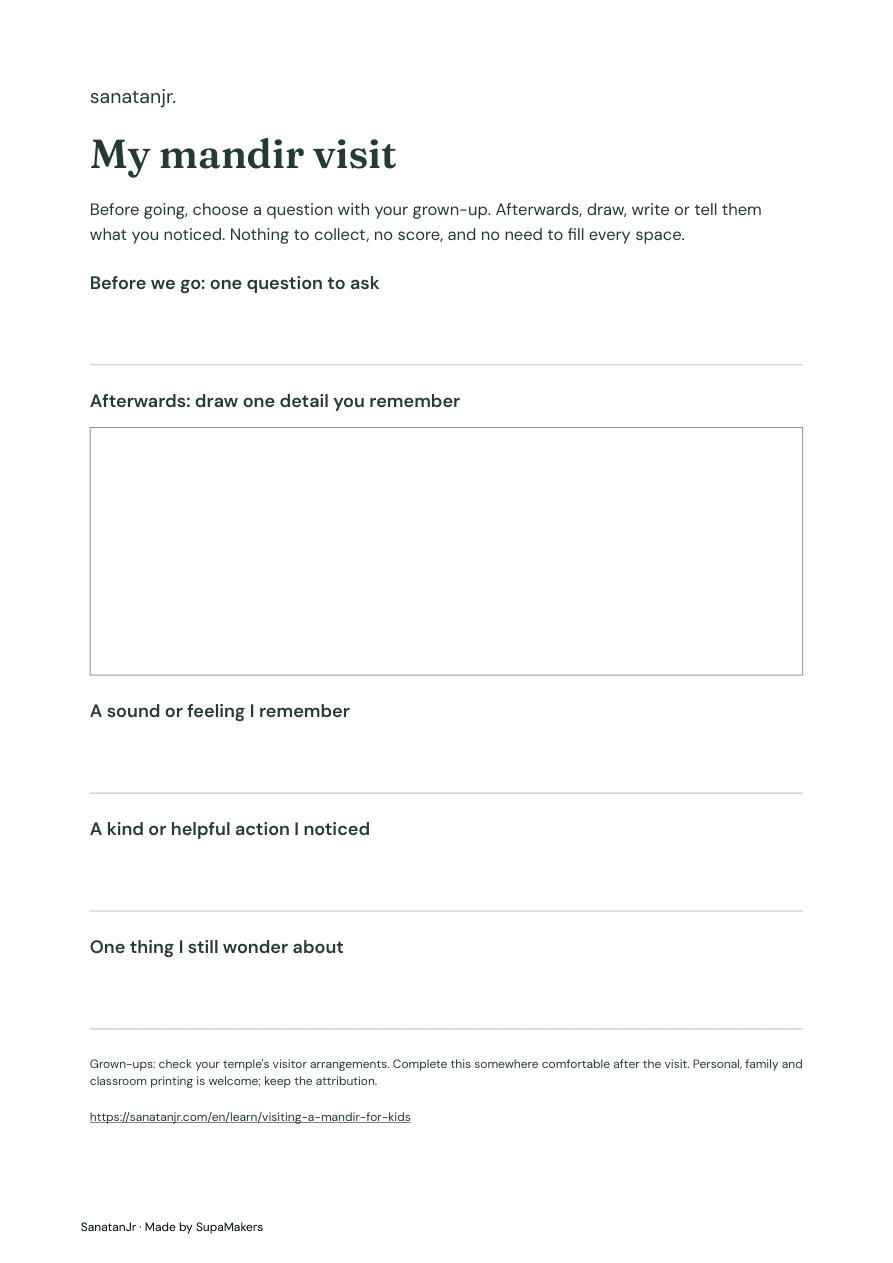
Use the observation sheet to draw a remembered detail and save a question for another day. There is no score and nothing to collect inside the temple. If a visit is not possible yet, prepare your question using this guide and leave the observation spaces for later. Then choose a connected story or prayer to understand one part of the visit more deeply.