Read together
A celebration of Shri Ram’s birth
Ram Navami celebrates the birth of Shri Ram. Navami means the ninth lunar day; the festival is observed in the bright half of Chaitra. It brings families and communities together in devotion. Shri Ram is honoured as an avatar of Vishnu and is central to the Ramayana, whose stories people encounter through readings, songs and performances.
Celebrations differ between communities. A BAPS report from London in 2016 describes prayers, devotional singing and a noon arti for Shri Ram. In that community, Swaminarayan Jayanti was celebrated alongside Ram Navmi. This is one documented example, not a programme that every temple or family follows.
Listen to a story with care
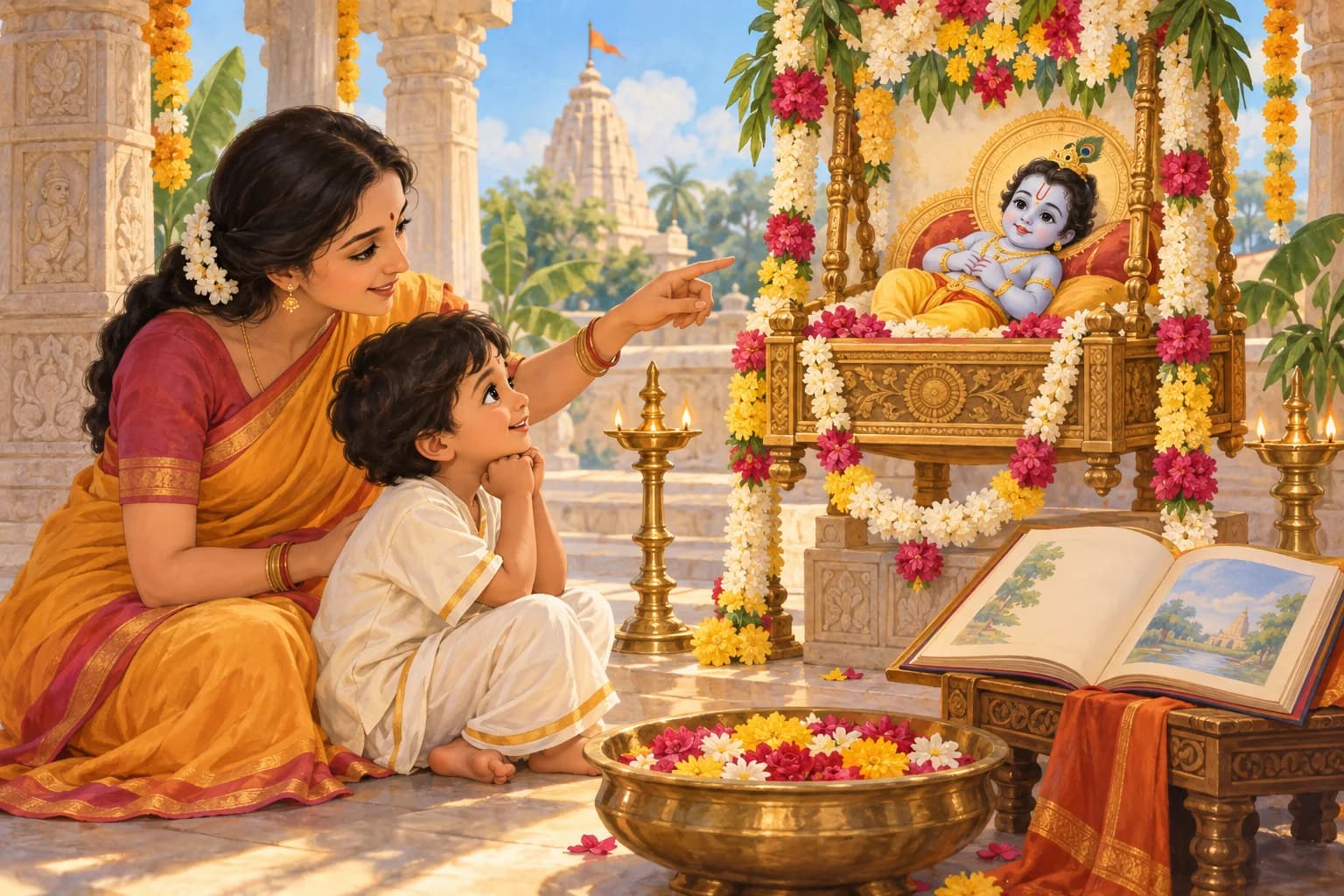
A birthday celebration gives us a reason to learn more about the person being honoured. For a family reading, choose a short Ramayana episode: Shabari’s welcome, Bharata caring for the kingdom, or Hanuman Ji meeting Shri Ram. Ask which text or telling your book follows. Familiar versions may include different details.
Before reading, give everyone one question to hold: ‘What choice does this person make?’ Pause when the choice appears. A younger listener can point to a picture; another can explain what happened in their own words. Our reading plan is a learning suggestion, not a replacement for a family’s worship.
Choose a question to carry home
Suppose you choose Shabari’s welcome. Notice how attention, hospitality and listening shape the meeting in our reading. Then ask about welcoming a visitor at home: what would help them feel comfortable? Keep the sacred account and your everyday example distinct, so nobody mistakes a newly imagined scene for part of scripture.
Ram Navami and the homecoming associated with Diwali mark different moments. The first celebrates Shri Ram’s birth; the second can recall his return to Ayodhya with Sita and Lakshmana. A simple before-and-after story line can help a child place the readings without needing to memorise every event of the Ramayana.
Finish your family session with a question you would like to explore next. Perhaps you want to know more about Bharata’s responsibility or Hanuman Ji’s friendship. Write the title of the next reading on your card. A short, attentive conversation can leave room for curiosity after the festival day has ended.