Read together
A birthday remembered with devotion
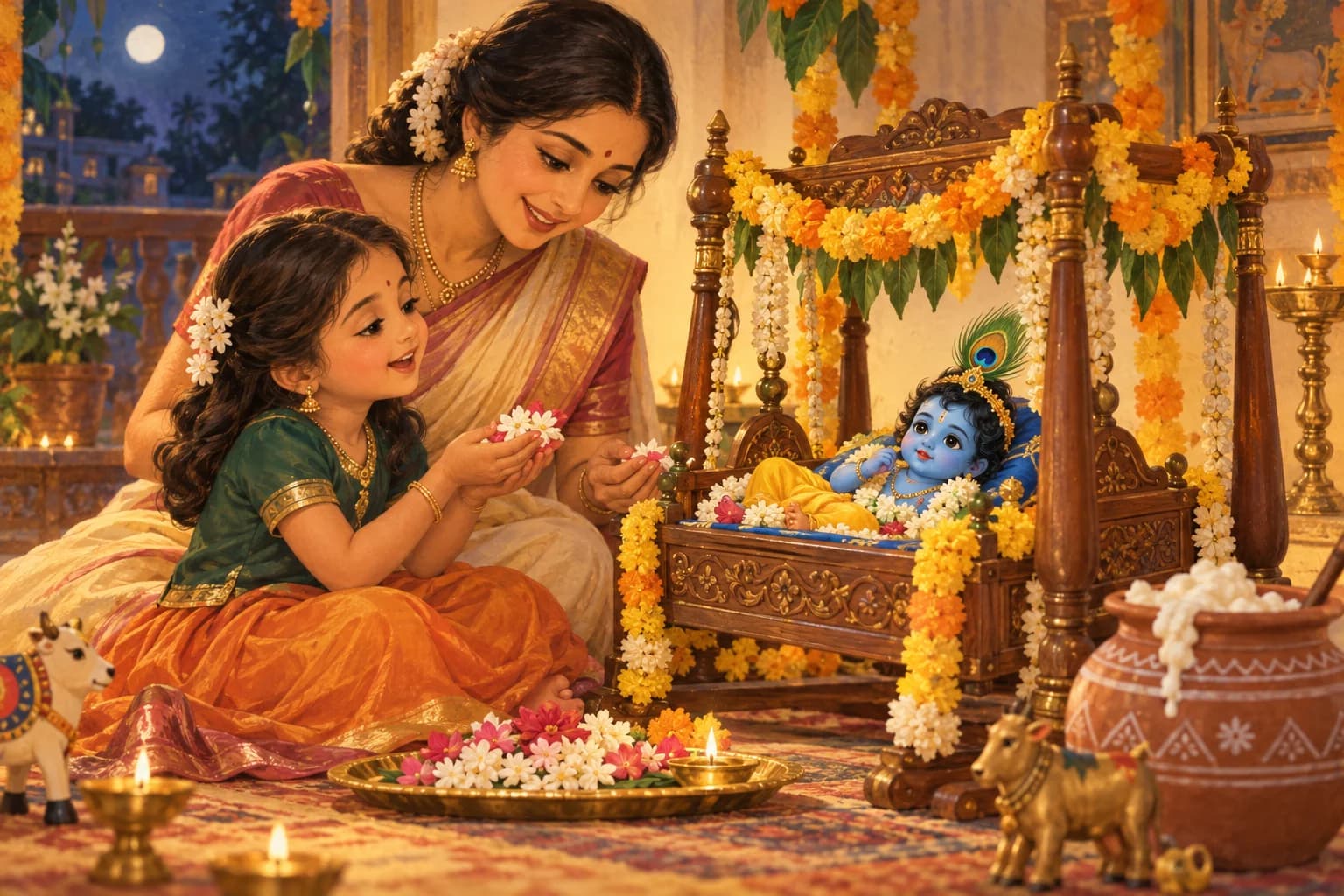
Janmashtami celebrates Krishna’s birth. For devotees, remembering him is a way to express bhakti, or loving devotion. Many Hindu traditions understand Krishna as an incarnation of Vishnu; in traditions such as Gaudiya Vaishnavism, he is worshipped as the Supreme Lord. Families may use different words to explain their relationship with him.
A birthday celebration can bring many parts of a person’s life to mind. At Janmashtami, childhood stories, devotional songs and sacred readings help people remember Krishna. You may hear about the playful child, the beloved friend or the teacher. These are different ways in which devotees turn their attention towards him.
What might you see or hear?
Some temple celebrations include kirtan, devotional singing, as well as readings, drama or dance. You may see priests perform abhisheka, the ceremonial bathing of Krishna’s murti. These are practices to ask about when you visit. Knowing a word can help you follow an explanation, but you can also begin with a simple question: what is happening now?
Many celebrations reach a special moment at midnight, the traditional time remembered for Krishna’s birth. Families arrange their participation in different ways. For our reading activity, choose a time when your child can enjoy being with you. A short, attentive gathering earlier in the day can still give you something meaningful to discuss.
Make space for one story
Start by choosing just one Krishna story. The fruit seller’s offering gives you a small meeting to follow. The Govardhan story opens a larger scene with people and animals needing shelter. Let your child choose which question interests them, then read that story without trying to cover every episode at once.
Afterwards, invite everyone to remember one detail. Someone might recall a handful of fruit; another person might remember the calves under the mountain. Different details can lead to different questions. Give each person time to explain what caught their attention, including anyone who prefers to draw their answer.
End your gathering with one small act of care that your family chooses. You might put the reading materials away together or make a bookmark for the person who read aloud. This is our suggested family activity, and each household can adapt it. The aim is to give attention to a story and to the people sharing it with you.